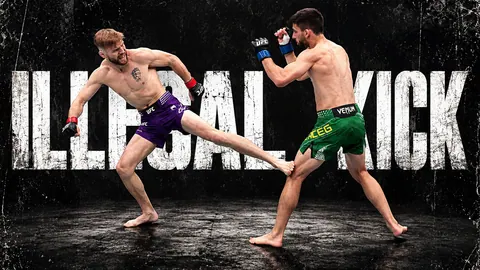
The discussion around banning the low-line side kick may be the hottest it has ever been. It’s always been controversial, but usually the argument comes from a loud minority, burns for a few days, and eventually disappears without anything actually changing.
Do things seem a bit different this time around, or is it just me?
Andy Foster is now pushing for a more serious review of the technique and seems to believe there is a real chance it could become a foul. Dana White has already publicly backed the idea. So for the first time in a while, this isn’t just people arguing online about whether the kick is dirty. There might actually be something done about it.
As I mentioned in my previous article, BAN OBLIQUE KICKS, this isn’t the first time Foster has been involved in this exact conversation.
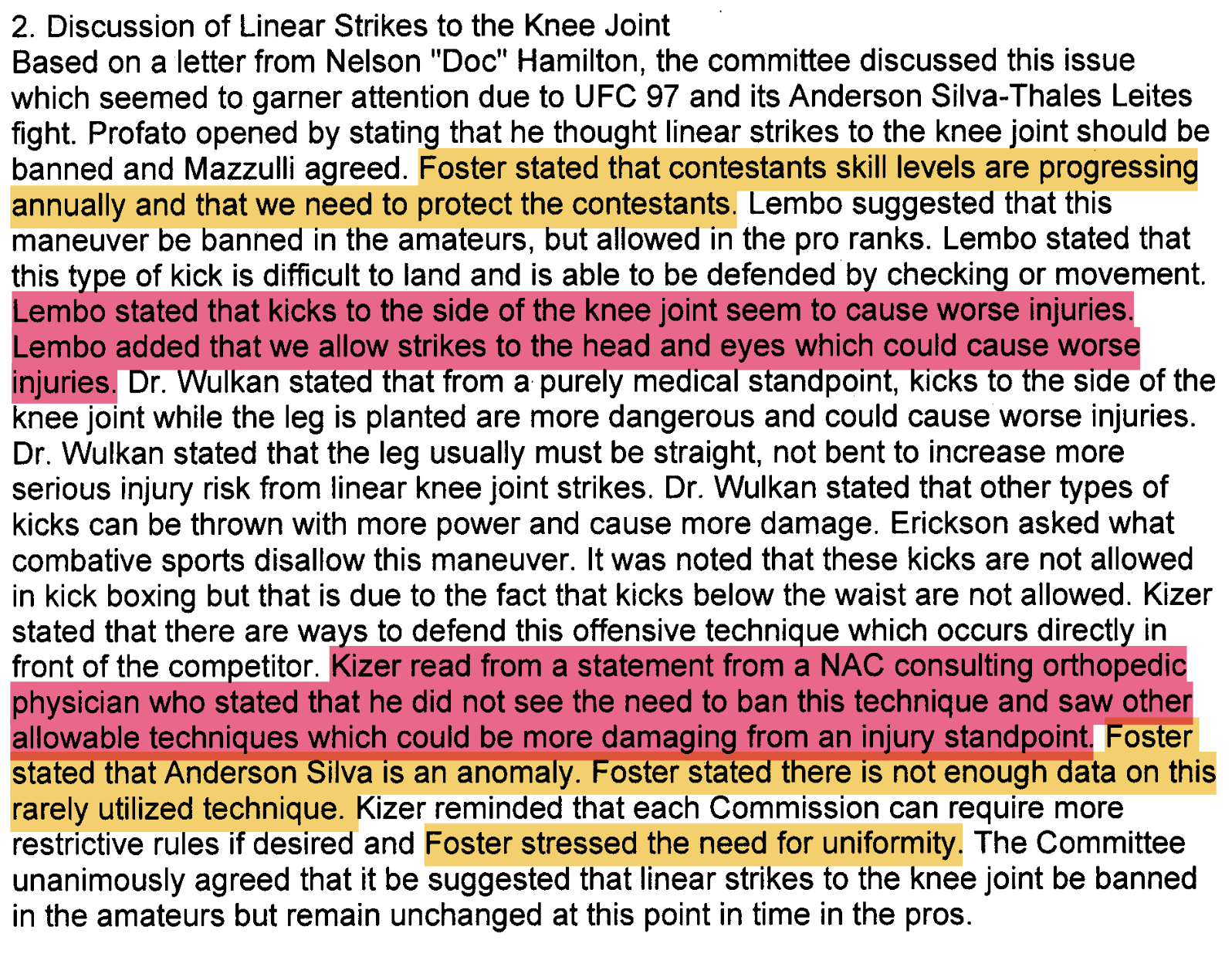
After Anderson Silva repeatedly attacked Thales Leites’ knee with the technique in 2009, the Association of Boxing Commissions’ MMA rules committee formally discussed whether linear strikes to the knee should be banned.
Foster was involved in that discussion and, at the time, his position was simple: there wasn’t enough data.
What changed?
We’ve obviously seen more of the technique since 2009. Jon Jones helped popularize it. More fighters train it now. Khalil Rountree badly damaged Modestas Bukauskas’ knee with one in 2021, and Bukauskas eventually needed surgery. Nobody is arguing that the kick can’t hurt someone. Of course it can.
But MMA is full of techniques that can badly hurt someone. That’s kind of the problem with using the severity of one injury as an argument for banning something. The real question is whether this particular kick is causing serious injuries often enough to justify treating it differently from everything else fighters are allowed to do.
Ariel Helwani basically asked Foster that directly.
Are there statistics showing these kicks are ruining careers or significantly sidelining fighters? Has anybody actually looked at how dangerous they are?
Foster didn’t really have an answer. In fact, I found his answers, and the interview in general, to be a disaster.
He said he had seen “a few insurance things” where the bills were pretty high. Then, almost immediately, admitted that these injuries don’t happen that often. He said he thinks they’re happening more and believes fighters are starting to train the technique more.
😅 Okay.
In 2009, there wasn’t enough data to ban it. Seventeen years later, when asked for the data, we’re talking about “a few insurance things.”
What things?
That insurance comment is interesting, especially because fight night insurance can be messy. Fighters have talked before about entering fights already hurt and using event coverage afterward to get injuries treated. Cub Swanson has described exactly that kind of situation from earlier in his career. So if insurance claims are part of Foster’s reasoning, why?
His argument now seems to be less about evidence showing the technique is unusually dangerous and more about what he personally believes the acceptable level of risk should be.
He says these injuries can have lifelong consequences and fighters have short careers. You only have to fail to defend the kick once. If you’re using it to manage distance, you can use a teep instead. He also believes some fighters are throwing it specifically to hyperextend the knee and damage the ligaments.
That last point is laughable.
I can understand what Foster is getting at. I’m just not at all convinced by it.
He says you only have to be wrong once defending this kick and you could end up with a serious injury. That’s true, but you only have to be wrong once defending a lot of things in MMA. If this particular mistake carries some uniquely unacceptable amount of risk, I’d like to see the evidence establishing that.
He also distinguishes the kick from heel hooks and kneebars because a fighter can tap before a submission destroys the joint. Andy may not realize this, but a fighter can submit at any time, whether that’s physically with a tap or verbally. A fighter could feel those oblique kicks hitting their knee and tap before taking any more damage.
Is a fighter going to take one low-line side kick and immediately submit because their knee hurts? Probably not. Fighters don’t always tap to submissions either.
Tim Sylvia didn’t tap when Frank Mir broke his arm at UFC 48. Antônio Rodrigo Nogueira didn’t tap before Mir’s kimura broke his arm at UFC 140. Jamahal Hill had his arm dislocated by Paul Craig at UFC 263 and, rather than submit, actually pushed it back into place and continued trying to fight.
The option to tap certainly doesn’t guarantee a fighter avoids injury. Fighters are stubborn. They try to escape. They misjudge how much danger they’re in. Sometimes the damage happens before they decide they’ve had enough.
So I don’t think “you can tap to a heel hook” by itself explains why one technique represents an acceptable risk to a fighter’s knee and the other doesn’t.
What I also haven’t heard much about is what the fighters think.
Foster explains that he’ll take the issue to the rules committee, discuss it there and potentially bring it before the ABC for a vote. I haven’t heard him say that he’s surveyed active fighters.
Oddly enough, we know he asked Ariel Helwani what Ariel thought about it. Ariel says Foster texted him asking for his opinion.
Has he made the same effort with the people who actually have to defend the kick?
Even Bukauskas, whose injury is probably the strongest argument for banning it, defended Rountree afterward and said it was his responsibility to defend a legal technique.
That doesn’t mean fighters should get the final say. Regulators exist for a reason. But if you’re going to change the sport in the name of protecting fighters, I think their opinions should probably be part of the conversation.
Maybe Foster has information that hasn’t been made public. Maybe doctors working with CSAC are seeing an injury pattern we aren’t seeing. Maybe the technique really has become more dangerous as fighters have started training it more intentionally.
But if that’s the case, show us.
Foster’s position in 2009 was that there wasn’t enough data to take this technique away from professional fighters. If we’re going to do it now, I want to know what happened during the last 17 years that changed his mind.
Maybe we’ll find out soon.